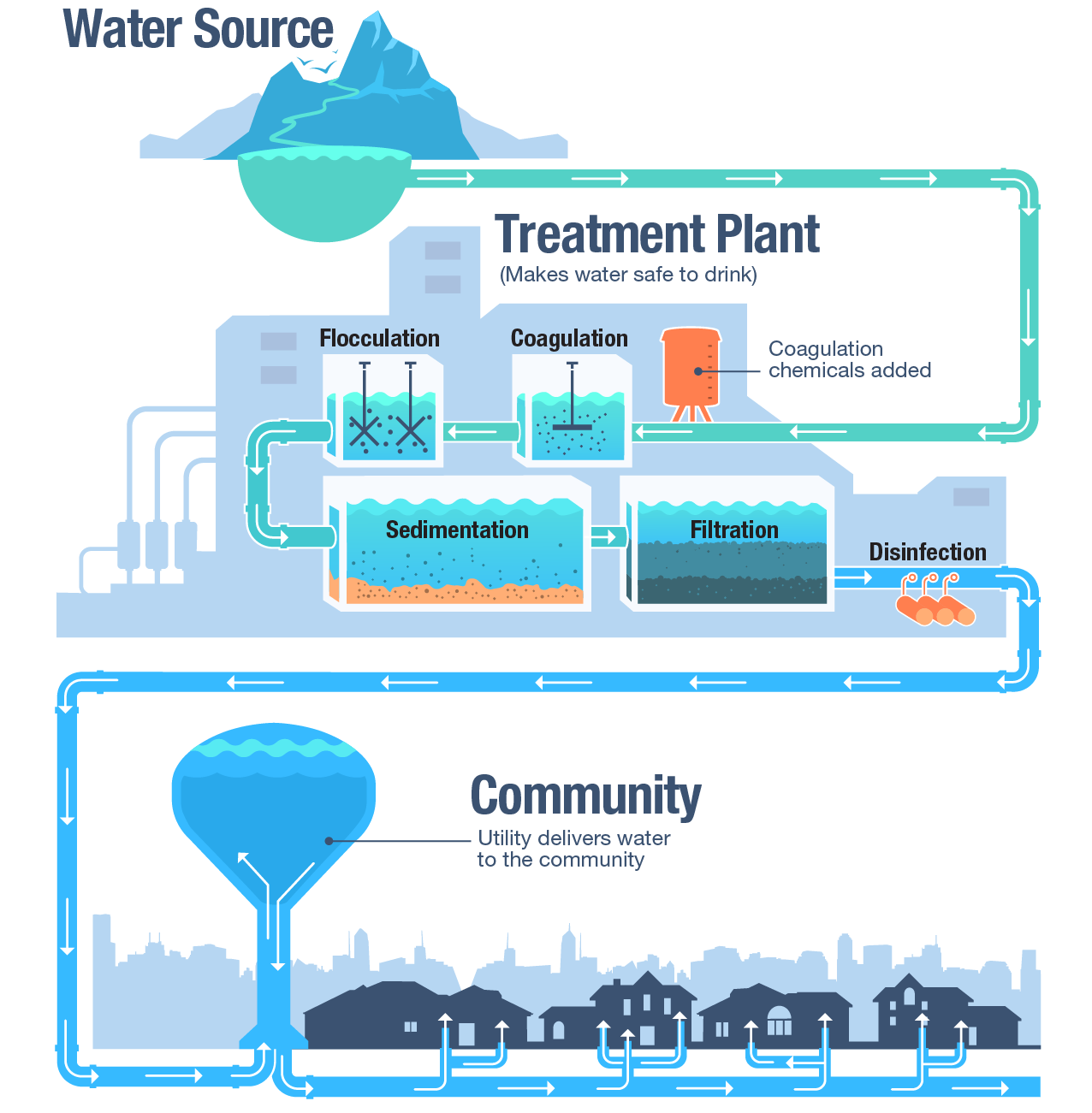
Designing a water supply system for a small town involves a comprehensive process that integrates various technical and logistical components to ensure a reliable, efficient, and sustainable supply of water. Lets march into the basic process to design a robust, efficient, and sustainable water supply system
1. Demarcation of the Service Area
Identify the Service Area: Demarcate the service area based on political boundaries, settlement patterns, and the feasibility of the water source. Not all areas within the political boundary may need to be covered by the piped system; alternative options can be provided for uncovered areas.
2. Determine the Design Period
Design Period: Typically, for small towns, the design period is 20 years. This period accounts for the expected growth in water demand and the lifespan of the system components.
3. Population and Water Demand Assessment
Population Survey: Conduct a thorough survey to establish the present population and project future population growth. This forms the basis for calculating future water demand.
Water Demand Calculation: Calculate the water demand considering domestic, non-domestic (institutional, commercial), and unaccounted-for water (UFW). Per capita water demand varies between 65-100 liters per capita per day (lpcd) depending on the type of house connections.
4. Hydraulic Design of the System
Pipe Network Design: Develop a balanced pipe network ensuring minimum pipe velocity and residual pressure at nodes. The system should detail the pressure and flow, maintaining a minimum residual pressure of 10 meters and a cleaning velocity of 0.2 m/sec at peak flow conditions.
Transmission and Distribution: Design transmission mains for the average daily demand at the end of the design period. Distribution systems should be designed for peak flow conditions, using either branched or looped systems.
5. Water Quality and Treatment
Water Quality Standards: Ensure that the water quality meets the National Drinking Water Quality Standards. This involves designing appropriate treatment processes to maintain the desired water quality.
Treatment Facilities: Include the design of water treatment units as part of the system, specifying the processes and technologies to be used for treating the raw water.
6. Storage and Reservoir Design
Reservoir Sizing: Assess the size of the reservoir based on the maximum cumulative deficit between supply and demand. Typically, the reservoir capacity is between 20-30% of the total daily demand.
Location: Preferably, locate the reservoir near the center of the service area to ensure uniform pressure throughout the distribution network.
7. Electro-mechanical and SCADA Components
Pumping Stations: Design pumping stations with detailed layouts for pumps, electrical supply, and piping systems. Select energy-efficient pumps to minimize operational costs.
SCADA Systems: Integrate SCADA (Supervisory Control and Data Acquisition) systems for real-time monitoring and control of the water supply network. This includes detailed diagrams and specifications for SCADA components.
8. Cost Estimation and Financial Planning
Rate Analysis: Develop realistic unit rates for all cost components based on the latest market rates and standard norms. This includes detailed cost estimates and Bill of Quantities (BOQs).
Bid Document Preparation: Prepare comprehensive bid documents including instructions to bidders, conditions of contract, technical specifications, and detailed drawings.
9. Operation and Maintenance Planning
Operational Efficiency: Design the system to minimize operational costs, particularly energy consumption. This involves careful selection of pumps and system components to ensure efficient operation.
Maintenance Strategy: Plan for regular maintenance activities, including the use of chemicals and other operational supplies. Ensure the system is designed for ease of maintenance and operation.
Conclusion
Designing a water supply system for a small town involves meticulous planning and detailed engineering to ensure the system meets the current and future needs of the community. By following the guidelines and steps outlined above, engineers can create a robust, efficient, and sustainable water supply system.